



Blog Details
Top Advantages of Using Brass Forging Parts in Manufacturing
Introduction
The most trustworthy and beneficial manufacturing method for producing high-quality parts is brass forging. Brass, an alloy of copper and zinc, is used due to its good mechanical properties and workability and has been used for centuries. If the brass parts are forged rather than cast or machined, the strength and integrity are enhanced further. In this blog, we discuss the top benefits of using brass forging parts in manufacturing.
What Are Brass Forging Parts?
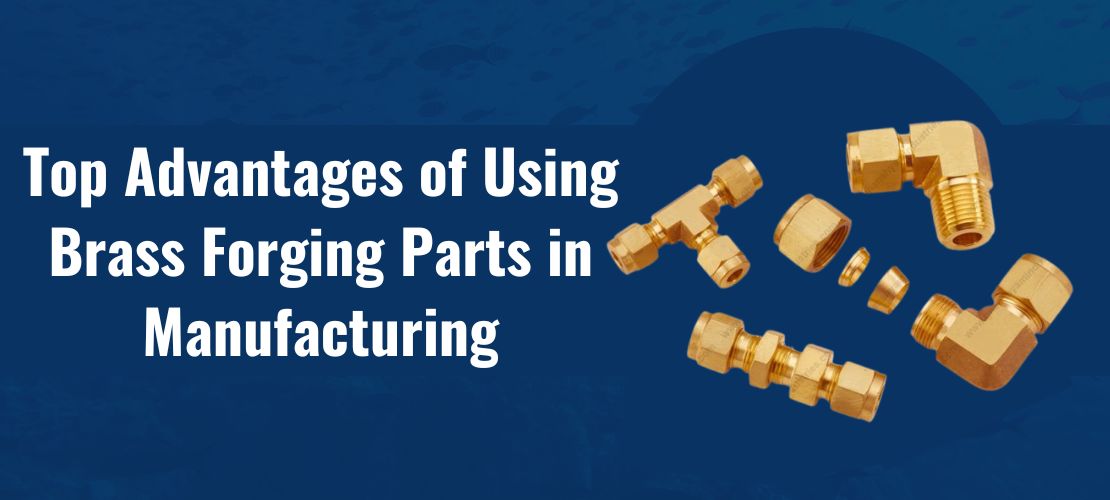
Brass forging parts are precision-engineered components manufactured by shaping heated brass under high pressure using forging dies. This process improves the metal's grain structure, resulting in stronger, more durable, and more reliable parts compared to cast or machined components. Brass forging is commonly used to produce valves, fittings, connectors, adapters, plumbing hardware, electrical components, and automotive parts.
1. Outstanding Strength and Stability
To make brass, the metal is compressed to very high pressure to form the desired form. Unlike casting or milling, which can result in internal voids and inconsistencies, forging aligns the grain flow of the brass, thereby expanding tensile strength, impact resistance, and long-term durability.
This structural integrity makes Brass Forging Parts ideal for applications such as
- Fluid systems and gas systems under high pressure
- Load-bearing components
- Safety-critical components for aerospace and automotive industries
With an improved strength-to-weight ratio, forged brass parts can handle greater mechanical stress without failing and ultimately decrease maintenance and replacement costs.
2. Excellent Corrosion and Wear Resistance
Brass is corrosion resistant, especially to water, air, and a huge range of chemicals. Forged brass parts are recommended for use in applications with the following:
- Moisture
- Saltwater
- Acids and alkalis
- Various industrial chemicals
This is why brass forging is most popular with plumbing components, marine applications, HVAC systems, and chemical processing plants.
3. Dimensional Accuracy and Consistency
Forging offers close tolerances and repetitive accuracy, which is crucial in high-production environments. In contrast to casting, with much post-processing to remove defects and inconsistent geometry, forging produces near-net shape components, which sometimes require very little machining.
This leads to
- Less production time
- Less material waste
- Reduced rejection rates
- Easier integration problems with automatic assembly lines
Dimensional accuracy also ensures a good fit when the fitting and component are joined together, particularly in high-pressure systems or when the fitting is machined.
4. Enhanced Machinability
Brass forging parts in manufacturing remain highly machinable even after forging, making them easier to thread pipe, drill a hole, or finish a part. This lowers tool wear, reduces energy consumption during cutting, and enhances the overall efficiency of secondary manufacturing operations. Brass forgings are commonly used by manufacturers for parts that need complex configurations or premium surface finishes.
5. Cost-Effectiveness over the Long Term
Although the setup cost of forging can be more expensive than casting or stamping, the lifetime benefits usually balance the costs. Forged brass parts offer:
- More durable and longer-lasting service life
- Reduce loss in quality and failure in service.
- Less maintenance and replacement downtime
- Fewer rejections in quality inspection
The total cost of ownership (TCO) is lower due to this cumulative effect of the advantages, which can bring a benefit, particularly where quality and reliability are of concern.
6. Eco-Friendly and Sustainable
Brass is 100% recyclable; nothing is lost in the recycling process. Only a small amount of material is wasted in the forging process compared to machining parts from solid bars or blocks. The remaining offcuts or surplus can be simply reheated and used again.
Brass Forging Parts supports sustainability by:
- Reducing waste
- Extending product life cycles
- Promoting circular economy principles.
For manufacturers who are working to comply with industry and environmental regulations or are seeking to get green certifications, using forged brass products in their systems is a smart selection.
7. Excellent Thermal and Electrical Conductivity
As a copper-based alloy, brass maintains a similar level of thermal and electrical conductivity, which is significant in those industries where heat transfer and electrical performance are important. Applications of forged brass parts include
- Electrical connectors
- Heat exchanger components
- Battery terminals
- Thermostatic valves
With superior high-temperature and high-current environments, reliability and efficiency become their trademarks in the most demanding applications.
8. Aesthetic and Anti-Microbial Properties
Brass not only performs well—it also looks good. Manufacturing parts from forged brass can have a bright (high sheen) polish, but they can also have a satin brass finish by simply applying a finish coat of paint.
Additionally, brass features inherent antimicrobial properties—brass leeches harmful microbes, such as bacteria, fungi, and viruses. This makes it a desirable material in
- Medical equipment
- Food processing systems
- Public hygiene facilities (i.e., door handles and taps).
9. Versatility across Industries
Thanks to its unique balance of properties, that makes the brass forging parts useful in a wide array of industries like
- Automotive (others): Fuel system components, brake components, sensor housing, etc.
- Plumbing: Valves and pipe fittings
- Electronics: Plugs, switch parts, and terminal boards
- Aerospace: Corrosion-resistant parts as they are lightweight
- Construction: Decorative and structural hardware
There are few other materials that can match brass in such versatility across diverse industries.
Conclusion
Looking for high-quality custom brass forging parts? Hindustan Brass Industries manufactures precision-forged brass components for global industries with advanced production capabilities, strict quality control, and customized solutions. Contact our team today to discuss your project requirements.
Read More: Benefits of Using Brass Turned Parts in Industrial Projects
FAQs
Q1. What are brass forging parts?
Ans: Brass forging parts are components manufactured by shaping heated brass under high pressure to achieve superior strength, durability, and precision.
Q2. What are the benefits of brass forging parts?
Ans: They offer excellent strength, corrosion resistance, dimensional accuracy, long service life, and cost-effective performance.
Q3. Which industries use brass forging parts?
Ans: Brass forging parts are widely used in automotive, plumbing, electrical, marine, aerospace, HVAC, and industrial manufacturing.
Q4. Are brass forging parts corrosion resistant?
Ans: Yes, brass naturally resists corrosion, making forged brass parts suitable for water, chemical, and outdoor applications.
Q5. Can brass forging parts be customized?
Ans: Yes, manufacturers can produce custom brass forging parts in various sizes, shapes, and specifications to meet application requirements.
Q6. Are brass forging parts environmentally friendly?
Ans: Yes. Brass is 100% recyclable, and the forging process generates less material waste, supporting sustainable manufacturing.
Q7. Why choose brass forging over casting?
Ans: Brass forging provides higher strength, better grain structure, improved durability, and greater reliability compared to cast brass components.