



Blog Details
Benefits of Using Brass Turned Parts in Industrial Projects
Introduction
Brass turned parts are precision-engineered components manufactured using advanced CNC turning and automatic lathe machining processes. Known for their exceptional dimensional accuracy, corrosion resistance, excellent machinability, and long service life, these components are widely used across industries such as automotive, aerospace, electrical, plumbing, medical equipment, telecommunications, and industrial machinery. Their ability to maintain tight tolerances while reducing manufacturing costs makes them an ideal choice for high-performance applications. In this article, we explore the key benefits of brass turned parts, their industrial applications, and why manufacturers worldwide continue to choose brass for precision-engineered components.
What are Brass Turned Parts?
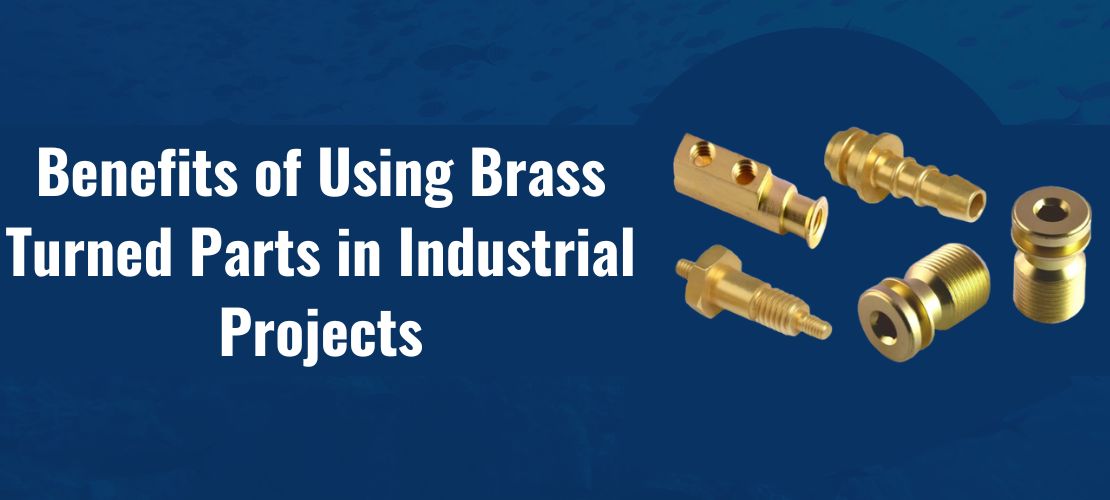
Brass turned parts are precision-machined metal components produced from brass rods using CNC turning machines, automatic lathes, or Swiss-type machines. These parts are manufactured with high dimensional accuracy and are commonly used in connectors, inserts, fittings, valve components, electrical terminals, sensor parts, adapters, spacers, and fasteners.
1. Exceptional Machinability and Precision
Brass is considered one of the best materials for CNC turning due to its good machinability. Its gentle and forceful properties allow for smooth cutting without excessive and low tool wear and heat generation.
Benefits include:
- Tight tolerance (best for high-precision components)
- Faster production cycles
- Smooth surface finishes
- Low cost for replacement tool
This makes Brass Turned Parts perfect for applications requiring intricate designs or extremely fine threads—such as instrumentation fittings, valve parts, miniature gear shafts, etc.
2. Corrosion and Wear Resistance
Brass offers natural resistance to corrosion and thermal and electrical conductivity. This makes brass-turned parts highly suitable for outdoor, marine, or chemical-exposed environments.
Industries that are taking advantage of this are
- Plumbing and water systems
- HVAC
- Marine applications
- Chemical processing
In addition to corrosion resistance, brass also resists wear and abrasion; hence, it can be used in items such as bearings, bushings, and connectors as well. Its durability reduces the replacement cost compared to other tapes, saving on maintenance costs.
3. High Electrical and Thermal Conductivity
For applications requiring high mechanical quality combined with good electrical conductivity, brass is an excellent and unique combination of benefits not available in most other materials. Brass turned parts are used for:
- Electrical terminals and screws
- Battery posts
- Switch and socket parts
- Heat sink elements
4. Dimensional Stability
Precision in industrial projects is non-negotiable. Brass-turned parts are most widely used as they are dimensionally stable, meaning they maintain their shape and size when subjected to mechanical or thermal stress. And they don’t warp or expand, so they can be counted in the toughest conditions.
This property is particularly useful in the
- Aerospace systems
- Automotive components
- Medical and laboratory devices
5. Aesthetic Appeal and Anti-Microbial Properties
Brass has a bright golden appearance characteristic and is ideal for decorative purposes or where the part is visible. In addition to its visual appeal, brass is antimicrobial and naturally prevents the growth of bacteria and viruses on its surface. This makes brass turned parts suitable for:
- Medical devices
- Food processing machinery
- Public touchpoints (e.g., door handles or taps)
6. Cost-Effective Production
While brass may not be the cheapest raw material on the market, it offers excellent value in the long run. Its durability reduces the frequency of part replacements. Because it can be recycled, it is generally considered more environmentally friendly.
There are several benefits of using brass turned parts:
- Reduce waste due to fewer defects.
- Less energy consumption in the machining process
- Minimal post-processing needed
- High scrap value for recycled materials
These advantages lead to a reduced total cost of ownership in industrial applications.
7. Wide Range of Alloys and Customization Options
Brass comes in various alloys with special properties. For instance:
- CZ121 is ideal for machining.
- Naval brass provides excellent corrosion resistance in seawater.
This selection means engineers can choose the best brass grade for each application. So whether it is short production runs or high-volume batches, brass-turned parts can be made according to your design requirements.
8. Recyclability and Environmental Benefits
It’s 100% recyclable and does not lose quality. In fact, the majority of the brass used in production today comes from recycled sources.
The benefits of environmental nature are
- Raw material extraction is also decreased.
- Less waste generation
- Positive circular economy impact
For sectors that want to fulfill environmental regulations or want to enhance their sustainability image, brass-turned parts provide an eco-conscious alternative.
9. Compatibility with Other Materials and Systems
Some common uses for brass turned parts in combination with other materials include
- Stainless steel
- Copper
- Plastics
- Rubber seals
They can be readily combined with solder, brazed, or threaded connections. This interconnectivity enables the use of brass fittings in some of the most complex mechanical systems without the issues of galvanic corrosion or fitment compatibility.
This property makes brass ideal for hybrid systems, including:
Multi-material plumbing assembly
Electrical enclosures with mixed components
Hydraulic seals and valves
Proven Performance across Industries
Various industries rely on brass turned parts because of their performance in:
- Aerospace (fuel fittings, couplings on an Airbus, etc.)
- Automotive (parts of sensors, adapters)
- Health (diagnostic devices)
- Construction (architectural hardware)
- Electronics (pin connector and terminal pins)
Brass combines high-performance requirements with in-process design flexibility, providing assurance that parts will perform as intended in real-world conditions.
Why Manufacturers Prefer Brass Turned Parts
- Faster machining
- Lower tooling cost
- Longer machine life
- Better thread quality
- Less finishing required
- Consistent production quality
Conclusion
In industrial projects demanding the highest quality, strength, and efficiency, brass-turned parts provide exceptional value. From superior machinability and corrosion resistance to good conductivity and sustainability, few materials possess the unique properties offered by brass.
Whether you're producing precision instruments, building complex machinery, or rugged fluid systems, the benefits of using brass turned parts can improve both product performance and long-term reliability.
Read More: Top Applications of Brass Turned Parts in Modern Manufacturing
FAQs
Q1. What are brass turned parts used for?
Ans: Brass turned parts are precision-machined components used in industries such as automotive, plumbing, electrical, aerospace, medical, telecommunications, and industrial machinery. They are commonly found in fittings, connectors, valve components, inserts, fasteners, and electrical terminals.
Q2. Why are brass turned parts preferred over other metal components?
Ans: Brass turned parts are preferred because they offer excellent machinability, corrosion resistance, high electrical and thermal conductivity, and long-lasting performance. They also require less machining time and provide accurate dimensions, making them a cost-effective solution for precision applications.
Q3. Are brass turned parts resistant to corrosion?
Ans: Yes, brass turned parts have excellent resistance to corrosion, moisture, and many chemicals. This makes them ideal for use in plumbing systems, marine equipment, HVAC components, and other environments where exposure to water or harsh conditions is common.
Q4. Can brass turned parts be customized for specific applications?
Ans: Absolutely. Custom brass turned parts can be manufactured in various sizes, shapes, thread types, and tolerances to meet specific project requirements. Modern CNC machining technology allows manufacturers to produce both small and large production batches with consistent quality.
Q5. Which industries commonly use precision brass turned parts?
Ans: Precision brass turned parts are widely used in industries including automotive, aerospace, electrical and electronics, medical equipment, construction, telecommunications, renewable energy, and industrial automation. Their reliability and precision make them suitable for demanding applications.
Q6. Are brass turned parts environmentally friendly?
Ans: Yes. Brass is a highly recyclable material that can be reused without losing its mechanical properties. Using recycled brass helps reduce raw material consumption, minimizes waste, and supports sustainable manufacturing practices.