



Blog Details
High-Quality Brass Forging for Industrial Applications
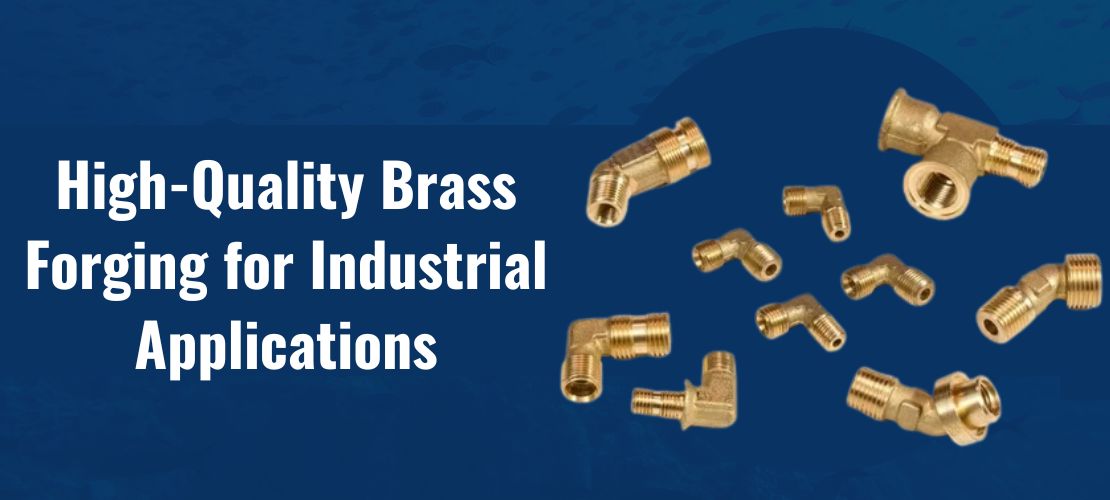
Brass is one of the most commonly used metals in the industry because of its durable mechanical properties, corrosion resistance, and also proper appearance. High-quality brass Forging is indispensable of its kind across industries like automotive, electrical, plumbing & aerospace, etc.
Due to brass forging suppliers in india, the requirement for brass forging companies suppliers in India is increasing as ever expecting high-pressure components for applications such as sensitive.
Understanding Brass Forging
Forging is a process of manufacturing where the metal is shaped using compressive forces. To some other methods, brass forging generally offers superior strength, better grain structure, and less production waste, increasing the reliability of the brass components. High-quality brass forging offers a durable and precise brass component which is the preferred method for industry requiring strong, reliable brass components.
The Brass Forging Process
- Material Selection: The selection of a brass alloy is done according to the mechanical properties and the application requirements needed.
- Heating: The billets of brass are warmed to a suitable temperature rendering them capable of being shaped into forgings.
- Forging: This starts by loading the heated brass into forged dies, after which tremendous pressure is applied to forge it into the correct shape. This not only improves the macroscopic properties but also refines the microstructure and improves the mechanical properties of that component.
- Trimming and Finishing: Since the component is to be dimensioned according to specifications, trimming excess material, mostly called flash, and the process of finishing with plating, polishing, and machining is done.
- Quality Inspection: Some essential inspections are carried out on the components to comply with set standards and to ascertain that they are defect-free.
Advantages of High-Quality Brass Forging
1. Enhanced Wear and Fatigue Resistance
Forged brass components have improved resistance to wear, abrasion, and repeated stress cycles. This makes them ideal for high-load applications like gears, bearings, and hydraulic fittings.
2. Improved Thermal and Electrical Conductivity
Brass has excellent thermal and electrical conductivity. Forged brass parts maintain these properties while providing strength, making them suitable for electrical connectors, heat exchangers, and power distribution systems.
3. Superior Dimensional Stability
Forging ensures consistent dimensions and tight tolerances, reducing deformation under operational loads. This is particularly important in aerospace, automotive, and precision engineering applications.
4. Environmental Durability
Forged brass components can withstand extreme temperatures, humidity, and exposure to chemicals without losing mechanical properties, ensuring long-term reliability in challenging industrial environments.
5. Design Flexibility
High-quality forging allows for complex and customized shapes while maintaining strength, enabling engineers to design components optimized for both performance and weight
6. Sustainability and Material Efficiency
Both forging and casting are common methods for manufacturing brass components, but they differ significantly in performance:
- Higher Strength: Forged components have refined grain flow, resulting in superior mechanical strength.
- Reduced Defects: Forging minimizes porosity and internal imperfections compared to casting.
- Better Performance Under Stress: Forged parts withstand pressure and mechanical stress more reliably.
- Shape Flexibility: While casting allows complex shapes, forging provides greater durability and structural integrity.
For critical industrial applications that require precision, reliability, and long-term performance, brass forging is generally the preferred choice.
Applications of Brass Forging in Industries
Automotive Industry
The automotive industry is an example of the need for High-Quality Brass Forging by having limited, high tolerances necessary for maximum performance in vehicle and engine operation, like gears or bearing or connector applications. Brass is suitable for automotive applications because of its high resistance to wear as well as very high thermal conductivity.
Electrical Industry
Forged brass parts have a big role in electrical gear, terminals, and connectors. They conduct electricity well and don't rust. Top brass forging suppliers in India make precise electrical bits to help electrical systems work better.
Aerospace and Defense
The aerospace field needs parts that can handle tough conditions. High-quality brass Forging gives extra strength and can take big temperature changes. This ensures aerospace and defense gear stays reliable.
Choosing the Right Brass Forging Suppliers in India
With each passing day, as India's manufacturing status increases, it makes choosing Indian brass forging suppliers India a critical task in achieving quality components. Here are some things to keep in mind while choosing a supplier:
- Experience and Expertise: Select suppliers with proven track records for brass forging, ensuring they adhere to high-quality standards.
- Advanced Manufacturing Facilities: A supplier with up-to-date machines and tech can make brass parts that are exact and long-lasting.
- Quality Assurance and Certifications: Trustworthy suppliers follow global quality benchmarks making sure their products hit industry targets.
- Customization Options: Based on sector-specific requirements, pick a supplier who provides tailored forging answers.
Future of Brass Forging in India
The outlook for Top-Notch brass forging suppliers in India seems bright pushed by tech progress and higher demand from different industries. As infrastructure growth, car market expansion, and focus on green practices increase, the need for effective and eco-smart forging methods will keep growing. Top brass forging suppliers in India are putting money into research and new ideas to create high-performing parts that meet worldwide standards.
Conclusion
High-quality brass Forging has a key impact on many industrial uses providing better strength for long-lasting performance and good value for money. As more people want brass parts, it's crucial to find trustworthy brass forging suppliers in India for industries looking for top-class forged items. As India's manufacturing world keeps changing, the brass forging field will stay an important piece of the country's industrial growth making sure that there are high-quality answers for many uses. Also Read About The Role of Custom Brass Parts in Industrial Growth.
FAQs
1. What is brass forging?
Ans: Brass forging is a manufacturing process in which brass metal is shaped using compressive forces. The process improves strength, refines grain structure, and produces durable components suitable for demanding industrial applications.
2. Why is high-quality brass forging important for industrial applications?
Ans: High-quality brass forging ensures superior mechanical strength, corrosion resistance, and dimensional accuracy. These properties make forged brass components reliable for automotive, electrical, aerospace, and plumbing industries.
3. How does brass forging improve component strength?
Ans: The forging process refines the brass grain structure and eliminates internal voids. This increases density and reduces the risk of stress-related failure, making components stronger and more reliable.
4. Why is forged brass suitable for harsh environments?
Ans: Brass naturally resists corrosion, and the forging process enhances its structural density. This makes forged brass ideal for marine, plumbing, and outdoor electrical applications where exposure to moisture and extreme conditions is common.
5. How does brass forging ensure precision and accuracy?
Ans: Forging allows tight tolerances and consistent dimensional control. This makes it suitable for industries such as automotive and aerospace, where precision directly affects performance and safety.