



Blog Details
Different Types Of Brass Fittings For Plumbing, Electrical, & Auto
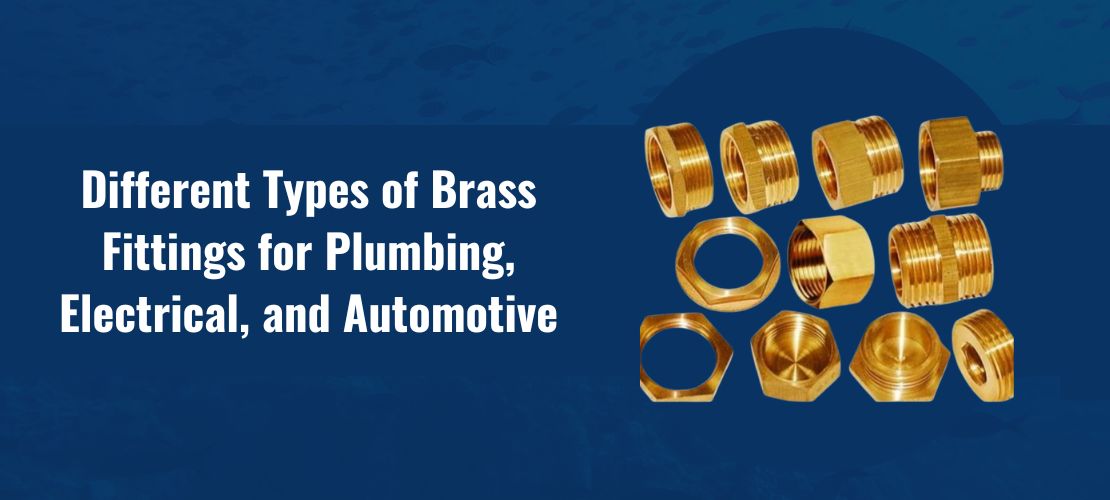
Brass fittings are one of the important parts of various industrial applications as they act as a connector to carry various chemicals due to their extraordinary characteristics including corrosion resistance, high strength, and durability. In plumbing, electrical, and automobile applications, they perform well with resistance to adverse environmental conditions.
The applications in which brass fittings are in common use are when extreme temperature fluctuations, very high-pressure levels, and exposure to moisture exist; hence, industries can prefer them for applications. This understanding, as a brass fittings manufacturer, will always help you determine the different types of brass fittings for your system, thus determining its performance and lifespan.
How to Select the Right Brass Fittings
- Material Quality: Always choose fittings manufactured from high-grade brass alloys. Low-quality brass components tend to wear out quickly, especially in automotive and high-pressure applications.
- Correct Size and Type: Ensure the fittings match the pipe diameter, thread type, and application—whether plumbing, electrical, or automotive.
- Industry Standards: Source fittings from trusted manufacturers that comply with industry safety and performance standards.
Different Types of Brass Fittings
1. Brass Fittings for Plumbing
Brass is commonly used in plumbing systems due to their high tensile strength, and ability to resist both water and chemical corrosion. Brass pipe fittings are used in the water distribution networks and heating apparatus. These offer extension points for pipes thus ensuring that the pipes are tightly connected so as not to present a leakage point.
- Elbows and Tees: These fittings are used for modification of directions in the movement of water or any other fluid. Elbows are those which consist of four openings and permit a change of direction in the pipe by 90 degrees while tees are also four-opening but produce a lateral of the primary line.
- Couplings and Unions: Couplings connect two parts of the pipe and unions permit separation in the instance of maintenance or replacement.
- Adapters: These are applied where pipes are of different diameters made of different materials.
When considering plumbing installations, it is important to use quality brass fittings observed by a trustworthy brass fittings manufacturer to have the ability to deliver quality results for a long time.
2. Brass Fittings for Electrical Systems
Brass fittings are also very advantageous when used on electrical systems. They are good electrical conductors and are resistant to corrosion hence lasering to be ideal for wiring and joints. Common types of electrical brass fittings include:
- Cable Glands: Most commonly they are used in sealing electrical cables where they connect with an enclosure to protect from moisture or dirt which may cause problems.
- Connectors: These preferred fittings apply when connecting electrical cables with intended reliability and conductivity.
- Electrical Terminals: Used for joining wires to the related elements, these terminals guarantee good connection ability.
Due to their importance in facilitating the correct running of electrical systems, appropriate brass fittings are very crucial and therefore depend on the reliable brass fittings manufacturer.
3. Brass Fittings in Automotive Usage
Brass fittings are also used on automobile fuel, water, and brake systems because of their desirable characteristic of withstanding high pressure and temperatures. Some examples of automotive brass fittings include:
- Fuel Line Fittings: These ensure the flow of the fuel line is safe to enhance fuel circulation without leakage in the neighborhood.
- Coolant Fittings: These fittings are very important in systems where hoses are used to connect parts of the cooling system, where the coolant is needed to flow and regulate the engine temperature properly.
- Brake Line Fittings: Being coupled to joining brake lines ensures this fitting won't compromise leakage with the system brake.
Advantages of Brass Fittings in the Industry
Being widely accepted throughout various kinds of industries. The benefits of having the brass type can be illustrated for the following reasons:
- Long Life: A brass alloy promotes durability and thus is very useful because brass fittings can sustain higher pressure and temperature limits for a longer period.
- Corrosion Resistance: Brass fittings resist corrosion and rust. Therefore, brass is suitable for use with moisture or chemicals in an environment.
- Versatility: Brass fittings are of diverse structures and sizes that can be used for any kind of purpose like plumbing, electrical, or automotive systems.
Advantages of Brass Fittings for Plumbing
High Pressure Tolerance: They can withstand higher water pressure than plastic fittings without cracking or deformation over time.
Long Service Life: Brass fittings last for decades, maintaining strength and performance, reducing frequent replacements and long-term plumbing maintenance costs.
Safe for Drinking Water: Lead-free brass fittings meet safety standards and are suitable for potable water supply systems.
Advantages of Brass Fittings for Electrical Systems
Excellent Electrical Conductivity: Brass provides reliable electrical conductivity, ensuring efficient current flow and stable performance in electrical wiring and connections.
Thermal Stability: Brass handles heat generated by electrical current without deforming, ensuring safety and long-term performance.
Long Service Life: Durable brass fittings reduce replacements and maintenance, offering reliable electrical performance over extended periods.
Advantages of Brass Fittings in Automotive Usage
Leak-Free Connections: Precision threading ensures tight, secure sealing, preventing leaks and improving safety in critical automotive fluid systems.
Long Service Life: Durable brass fittings reduce maintenance, replacements, and downtime, offering long-term reliability throughout the vehicle’s lifespan.
Corrosion Resistance: Brass fittings resist corrosion from fuel, oil, coolant, and moisture, ensuring reliable performance in harsh automotive operating environments.
Conclusion
In essence, different types of brass fittings are essential for the proper functioning of a system like plumbing, electrical, and automobilesystemsm because of their strength and resistance to corrosion. Whether it is the plumbing system for connecting your pipes, joining cables in your electrical installation, or connecting components in your vehicle, all you want is to find yourself a trusted brass fittings manufacturer who will give you the best quality standards.
Read More: Understanding the Manufacturing Process of Brass Fittings
FAQs
Q1. What are brass fittings used for in plumbing?
Ans: Brass plumbing fittings connect pipes and provide secure, leak-resistant connections in water distribution and heating systems.
Q2. What types of brass fittings are used to change pipe direction?
Ans: Elbows and tees are brass fittings that change pipe direction and allow branching of water flow.
Q3. What is the purpose of brass couplings and unions?
Ans: Couplings join pipes end-to-end, while unions allow easy disconnection for maintenance or replacement.
Q4. How do adapters work in brass plumbing systems?
Ans: Adapters help connect pipes of different diameters or materials to ensure compatibility in plumbing systems.
Q5. Are brass fittings suitable for electrical systems too?
Ans: Yes , brass fittings like cable glands, connectors, and terminals are used in electrical applications due to good conductivity.
Q6. Where are brass automotive fittings commonly used?
Ans: In automotive systems, brass fittings are used for fuel lines, coolant systems, and brake line connections.
Q7. Why is brass preferred for plumbing applications?
Ans: Brass offers high tensile strength and corrosion resistance, making it ideal for plumbing where water and chemicals are present.
Q8. What should be considered when selecting brass fittings?
Ans: Consider material quality, correct size, type, and industry safety standards when choosing brass fittings.